"Lumpini Wisdom" Reports Strong Demand for Smart Homes in the COVID-19 Era
"Lumpini Wisdom" Reports Strong Demand for Smart Homes in the Era of COVID-19
"Lumpini Wisdom" states that "Smart Residence" meets the needs of living, hygiene, and technology in the post-COVID-19 era, with an average growth rate of over 40% per year.

Mr. Prabhan Sak Raksaiwan, Managing Director of Lumpini Wisdom and Solutions Co., Ltd. (Public Company), a research and development company under L.P.N. Development Public Company Limited, discussed the current trends in residential development, stating that the COVID-19 pandemic has prompted real estate developers to design residences that cater to the lifestyles of people under the new normal, which has now become the current normal. This design considers three main factors: the design of usable space and materials (Function & Material) that are conducive to living and environmentally friendly, a focus on hygiene (Health), and the incorporation of innovations for living using Internet of Things (IoT) technology and smart devices to enhance comfort and safety.
According to IDC, a U.S. marketing research institute, the number of Smart Residence devices worldwide is growing at an average rate of 31% per year, increasing from 644 million units in 2018 to 1.3 billion units by 2025, more than doubling in just three years. Meanwhile, A.T. Kearney estimates that the global market value of Smart Residence will reach $263 billion, or approximately 8.4 trillion baht, by 2025. The study indicates that most Smart Residence products prioritize two main categories: devices that enhance convenience in daily life and those that address security needs.
Furthermore, Messe Frankfurt New Era Business Media studied the growth of the Smart Residence market in Thailand, revealing that the market value of Smart Home products in Thailand was 645 million baht in 2016 and more than doubled to 2.5 billion baht in 2020, growing at an average rate of 40% per year. This includes Smart Residence products for elderly care, which grew the most at 60%, and Smart Home security products, which grew by 45% per year.
The survey results reflect that homebuyers worldwide are increasingly prioritizing the integration of technology into their living spaces, particularly in the form of smart homes or Smart Residences. This trend is also evident among homebuyers in Thailand, who are beginning to value residences equipped with technology and amenities that enhance comfort and safety.
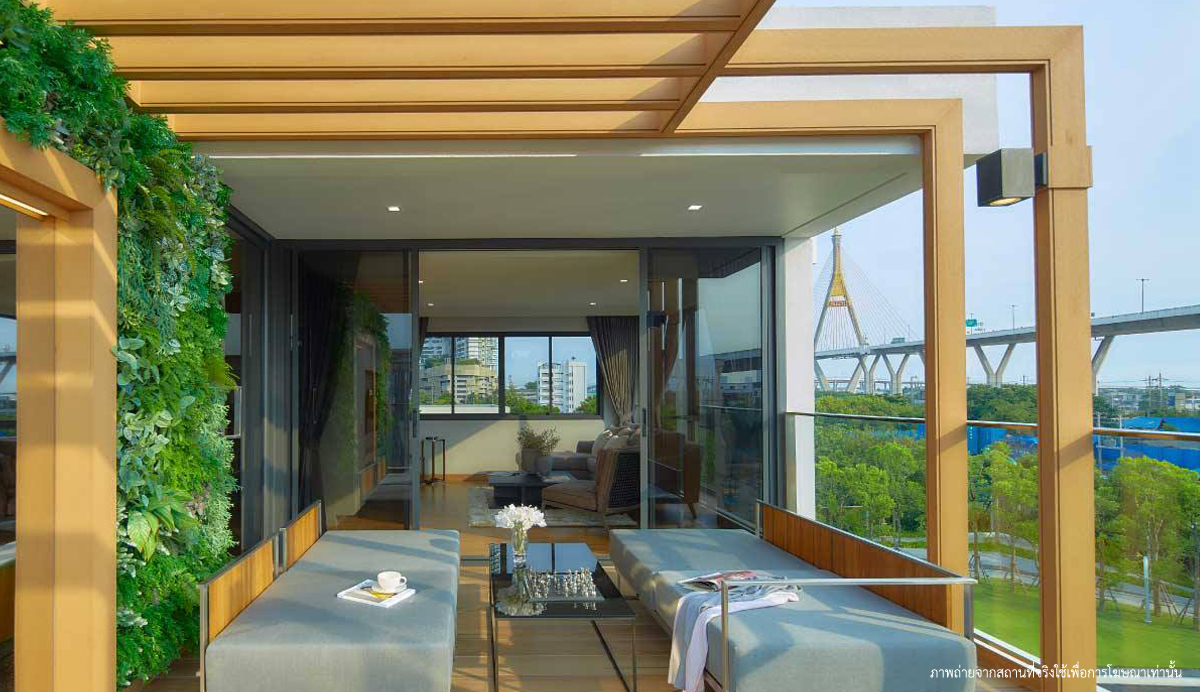
Research by the product development team at "Lumpini Wisdom" found that consumers prioritize three factors when choosing a residence:
- Usable space and materials (Function & Material)
- Design with a focus on hygiene (Health)
- Living technology (Smart Living Technology)
Smart Residence is one of the three key factors that consumers consider.
Usable Space and Materials in a Multifunctional Space
The study found that after the COVID-19 outbreak, people's lifestyles have shifted, with homes now serving as both places for relaxation and personal activities. Nowadays, homes are both workplaces and relaxation spaces, especially as more people work from home. This has led real estate developers to design residences with flexible spaces that can adapt to multifunctional use. For example, solid walls that divide spaces may need to be replaced with walls that can be opened to connect different areas of the residence, using sliding or folding doors. This not only enhances the flexibility of the usable space but also makes the residence feel more open and improves air circulation, catering to current and future living needs.
At the same time, the choice of materials within the residence must be appropriate, ensuring good ventilation and adequate natural light in the usable areas. For instance, kitchen areas, especially Thai kitchens, require materials that are easy to clean, water-resistant, and well-ventilated, while reading or living areas may need more natural light than bedrooms.
Design with a Focus on Hygiene (Health)
The COVID-19 pandemic and PM 2.5 dust issues have heightened public awareness of health. Current residential designs must prioritize good hygiene, utilizing innovative designs that promote health quality within the residence. This includes systems that reduce viruses and bacteria in the air using positive and negative ions, which can eliminate up to 99% of pathogens, and air circulation systems that ensure airflow even when doors and windows are closed. Additionally, health-promoting materials, such as low-VOC paints certified to emit low levels of harmful volatile organic compounds, or laminates that prevent bacteria and viruses, are essential.
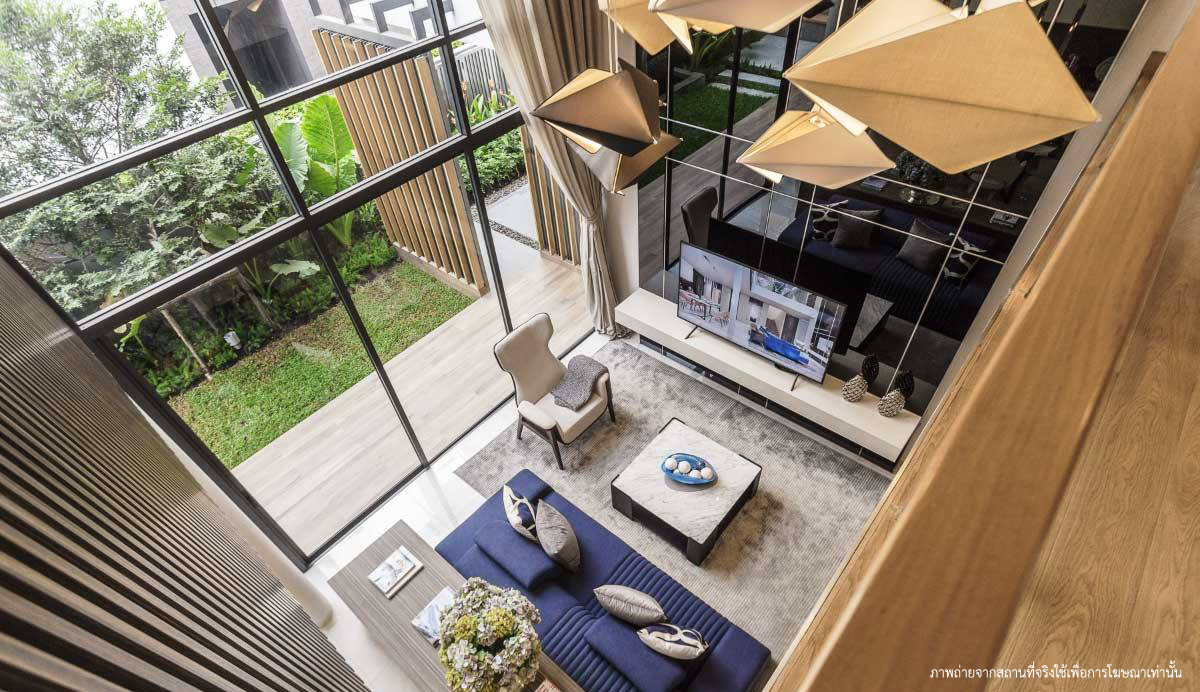
Moreover, green spaces within the home are another factor that promotes mental health for residents. Therefore, residential designs should include small garden areas or spaces for planting that can be viewed from inside the rooms.
Living Technology (Smart Living Technology)
The core of Smart Living Technology in Smart Residences is to provide convenience and safety in living.
In terms of convenience, the development of Smart Residences incorporates Home Automation technology connected to various control systems, either via voice commands or applications, to manage the operation of electrical appliances within the home. This includes controlling lights, home entertainment systems, plugs, adjusting air conditioning temperatures, and managing lighting and temperature within the home. Additionally, it connects to the internet with voice-activated devices, allowing users to search for information online or check traffic conditions before leaving home.
Furthermore, the development of Smart Residences must consider energy efficiency, leading to designs that incorporate innovations to address heat issues within the residence. For example, the Fresh Air Intake system facilitates air exchange and heat dissipation from the house by bringing fresh air into the home through ventilation openings and drawing heat from inside the house up to the attic through ceiling ventilation, expelling it outside via the roof's heat exhaust system. Alongside the Fresh Air Intake system, using quality materials such as glass, brick walls, roofs, or insulation can also help reduce energy consumption within the home.
Regarding safety, Smart Residences incorporate security systems with related devices such as CCTV cameras, motion detection sensors, and digital door locks. These devices can be controlled through applications or home automation systems, and in the event of an incident, alerts are sent to the user's phone.
Additionally, in gated communities or condominiums, the Smart Residence system allows homeowners to see visitors through CCTV at the project's entrance, helping to prevent unauthorized access. If an incident occurs within the home, alerts are sent to the security team at the project's entrance, enabling timely intervention. The use of Building Automation Systems (BAS) in buildings also aids in maintenance and upkeep according to appropriate schedules, reducing risks and damage from equipment wear over time.
“Smart Residences are being developed alongside the advancement of 5G technology to facilitate living and meet the changing demands of consumers. In addition to convenience and safety, which are crucial for future residential development, considering the pros and cons of choosing residences with stable technology at an affordable price is another important factor in selecting real estate that truly meets the needs of smart consumers in every dimension,” said Mr. Prabhan Sak.